Sunday, September 28, 2008

The Future of Progressive Islam? Part II

The last post on this topic ended with questions about the interface between Islam and the non-Muslim world, typified by post-Enlightenment Western European culture. This culture has come to dominate the world, due in part to accidents of history, economic success, and the innovation that has come from multiculturalism.

A program from Wisconsin Public Radio's To the Best of Our Knowledge entitled "East Meets West: Encountering Islam" and "East Meets West: A Culture in the Crossroads" has stories on how some individual Muslims are bridging the cultures. Among those featured are Kumail Nanjiani, Tariq Ramadan, Lupe Fiasco, and Ayaan Hirsi Ali.

Kumail Nanjani is a standup comedian living in Chicago who was born and raised in Pakistan. He has left Islam, but he began questioning the religion as a child. He was told that every missed prayer, in hell the punishment would be a mountain thrown on your back. He took this literally and began to wonder.

Why my back? If it were a mountain, it wouldn't matter if it were on my back. How big is this mountain? Could it be just a plateau? I could take a plateau. And how would this mountain end up on my back? Would there be a giant who threw the mountain at me? Overhand or shot put style? If there were a giant who was strong enough to throw mountains, why wouldn't he punch me? That would really hurt.


These questions naturally led to other ones and more things that didn't make sense. Nanjani gave his parents a DVD of his show. They had known previously that he had left Islam, but the video finally convinced them. On the one hand, they were happy to know that he wasn't an angry former Muslim. On the other hand, they were perplexed because he still seemed like a moral, caring person and couldn't understand how someone with those values could not be Muslim.

Tariq Ramadan is a Swiss-born philosopher who travels throughout the Islamic world trying to build bridges between European Muslims and conservative clerics. In the show he describes himself as:

I'm Swiss by nationality, European by culture, Egyptian by memory, universalist by principle, and Muslim, of course, by religion. These are five dimensions of my identities, but over all I am universality by principle.


Like Martin Luther, he is appealing to clerics to go back to the basics and use the Quar'an and Mohammad's life as the starting point for Muslim theology. This approach, he argues, would lead to a more dignified, simplified Islam, one that makes it easier for Muslims to participate in a modern world by providing a means for them to make decisions about how to live. In other words, to ask and answer one's own questions using primary sources, rather than following directives from an imam. He has advocated for a moratorium on stoning, death penalty, and corporal punishment in Islam. While he is personally against these punishments, Ramadan was asking for a moratorium to open a dialogue with Muslim scholars and clerics worldwide.

Speaking of advice, I heard on the BBC World Service on Saturday morning that one could telephone a call center in Abu Dabi, UAE to obtain advice on religious issues. If I recall correctly, this service is organized by the government of the emirate. They employ an esteemed panel and there is an elaborate process for arriving at the final advice, or fatwa. I couldn't find the story on the BBC web site, but there is an article on the Gulf News web site.

This brings us to Dubai, one of the emirates in the UAE, which will be the topic of my next post.

Tuesday, September 23, 2008

The Future of Progressive Islam? Part I

Islam is not known for being progressive, that is, embracing the modern world, more liberal values, and human rights. Although not an inherent part of the religion, Sharia law, wahabism, and the practice of covering for women have become identified with Islam. Over the last month, I have read some interesting articles and heard some podcasts that hint at what a modern, progressive Islam looks like.

Let's start with how political arrangements, societies, and authority in Muslim countries are fundamentally different from those that follow the Western European tradition of separating Church and State. There was a podcast on CBC's Ideas on "The Stillborn God" featuring an interview with Mark Lilla, author of a book with the same title. Lilla is a historian of ideas and is a professor of religion at Columbia University in New York. In the book and the interview, he explains that Islam follows a doctrine of political theology which is at odds with post-Enlightenment political philosophy.

Political theology is the doctrine that establishes the legitimate exercise of authority based on divine revelation. In other words, we are governed according to the word of the divine and by people who are divinely privileged. In contrast, Enlightenment thinkers, such as Hobbes, Locke, and Rousseau, argued that government and rule of law should be based on consent. In other words, the populace assents to be governed in a rational manner, because the benefits outweigh the costs. Therefore, government derives is political authority from the people. This is the beginning of the separation of Church and State; one reason that people consent to be governed is so they can be granted freedom to worship as they wish and guarantees on that freedom. (This is important because branches of the Christian church had been in extensive conflict for many years, e.g. the Reformation and Counter-Reformation in England. There were conflicts between religions, but they had less impact on Western Europe than intra-Christian ones.) In political theology, political authority derives only from God. Moreover, the idea of rule by popular consent is a sinful rebellion against the proper place of God in the world. Lilla's main point in drawing attention to this difference is to remind us that the decision to separate Church and State is not inevitable. We in the West should not be waiting around for Islamic states, such as Iran, Saudi Arabia, and Egypt, to "wake up" and realize that our way is a better way to organize things.

Given that we have two cultures that disagree so fundamentally over the ground rules over how government should be organized, how can they co-exist in a globalized, networked world? What is the place of second-generation Muslim immigrants in Europe? How can post-Enlightenment cultures explain themselves to Muslim countries? How can a Muslim country participate in the world economy?

Saturday, September 13, 2008

In the words of our soldiers

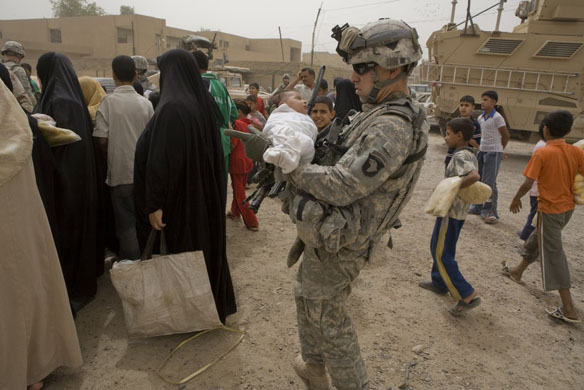
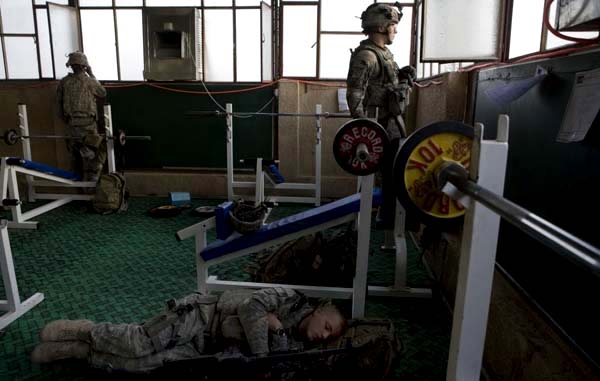
I was listening to CBC's As It Happens on Thursday night and not surprisingly they had some programming to mark the anniversary of September 11. The "For the Record" segment has people who are involved in stories speaking for themselves, in their own words. They featured a portion of a piece by Sean Smith of The Guardian newspaper in London entitled Endgame in Iraq. He had spent two months filming the U.S. 101st Airborne Division in Baghdad, who had been involved in heavy fighting Sadr City and Shulla. (Warning: There is a lot of cussing when the soldiers are in combat.)


In the video story, he has soldiers voicing their opposition to the war in a very powerful, rational, reasoned manner. The most horrifying parts of the video showed the soldiers interacting with Iraqi civilians. But the most surprising parts to me was hearing soldiers make the same arguments against the war that I do. Soldiers are imagined as unintelligent drones who follow orders. However, the 101st Airborne is a cut above, both in terms of training and the recruits they attract.

They said things like:

It's just a waste of time now. Too much money. Too many lives lost. Too many families destroyed, like mine. I miss them more than anything.


Basically, I think we're in a stupid pointless war, because a lot of politicians either a) can't admit that they were wrong or b) making a lot of money off this war.


I hate it here. It's hot. You're away from your family. It's very stressful. A limited amount of sleep. It sucks.


This war is stupid and pointless. This is not our country. This is not our war. We're in the middle of a civil war that's been going on for a couple thousand years now. this war is costing my country billions of dollars every month. I think the last count was between four and twelve billion dollars per month. This ware is contributing to the collapse of our economy and the devaluization of the America dollar. This war is stupid and pointless and it's ruining our country.


Iraq doesn't really care about us any more. They don't want our help. This country doesn't really want to change. I believe it's time to go home. It's time to stop losing lives. Stop wasting money. Just carry on with our lives. That's all I really have to say. Not much else. I miss my family. I miss m friends that died, the ones I've left behind. I'm done with it. Done fighting. Tired of it. That's all I got.


If this doesn't make you a peace advocate, I don't know what will.

There were no weapons of mass destruction. Iraq was not an imminent (or immanent) threat in 2002. Saddam Hussein had nothing to do with 9/11. If it was about the oil, then it definitely didn't help. The only things that the US has to show for their time are a lot of casualties (both military and civilian) and an enormous permanent base near Baghdad.

It's time to end the war in Iraq and bring our troops home.

Palestinian women giving birth at Israeli check points

There was story on the BBC today reporting that a soldier was jailed for refusing to allow a Palestinian woman in labor to pass through a checkpoint. The baby was ultimately stillborn. While this is absolutely a tragedy, the most shocking details appear later in the article.

Between 2000 and 2006, at least 68 Palestinian women gave birth at Israeli checkpoints, according to the Palestinian health ministry. Of these 35 women miscarried, and five died in childbirth.


We have to be a bit careful because the statistics come from the Palestinians, but it's not like the Israelis would be keeping track of something like this. In any case, this is a BBC article and I'm inclined to believe them, but they are a bit confusing. It's not clear what "miscarried" means here; was the baby stillborn? or was the woman miscarrying?

Regardless of these caveats, these statistics are appalling. A maternal death rate of 7%! A fetal death rate of 51%! This is just deplorable.

While these statistics describe the phenomenon at a macro level, I can imagine how it happens at a micro level. Soldiers are given rules to enforce at a checkpoint: no one passes without a permit. There is a suspicion that people are faking medical emergencies to get through the checkpoint. There is further suspicion that paramedics are confederates of the fraud or dupes. A young soldier has no idea of what goes on during childbirth and can't tell when a woman is really in labor. I'm not at all excusing the behavior of the soldiers; I'm just saying that are multiple personal stories behind this a story. Putting an end to these tragic events will require strategies and tactics at the macro and micro level.

Wednesday, September 10, 2008

Gluten-free and lactose-free eating in Milan


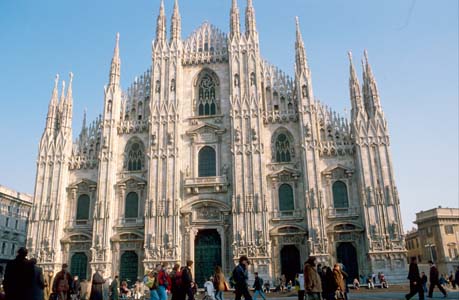
I've been in Milan, Italy since the weekend and I've had a terrific time. This is noteworthy because it's surprising for two reasons.

1) I have not enjoyed previous trips to Italy, because I found the country to be disorganized and chaotic. Milan is different. It's a world city, like New York. It's very cosmopolitan, and people are business-like, but nice. Drivers actually stop for you, unlike in Rome and Naples where it's the pedestrian's responsibility to get away. (The traffic is still pretty hairy, but this is due mostly to the scooters who act like bicycles, but move at car-like speeds and to the bicycles who act like pedestrians, but move at sprinting speeds.) Milan also seems like a very safe city. There are lots of women taxi drivers, a phenomenon that I have not seen anywhere else.
In addition, Milan has a great transit system (streecars, buses, and subway), so I have been to many parts of the city.

Coincidentally, a story appeared on BBC NEWS reporting that the Dante Alighieri Society (similar to the Academie Francaise) are calling on Italians to use less English. Words like leadership, weekend, OK, and know-how are being used part of the common language. I had noticed the phenomenon in my time here. Since I only speak guide book Italian, I definitely notice when an English work or phrase pops up. It's similar to listening to francophones in Montreal, but with a lower proportion of English overall.

2) I have a long list of things I can't eat. I can't have gluten, lactose, or caffeine, otherwise Bad Things Happen. Also, I'm supposed to stay away from sugar, starches, and saturated fats because I have high cholesterol and high triglycerides. This doesn't leave much that I can eat-- mostly green leafy vegetables. I can compromise on the second set, but not the first. Italian food is particularly problematic for me with the bread, pasta, pizza, and cheese.

Amazingly, I have been able to find things to eat. Around the corner from the hotel is a very nice grocery store, Esselunga, which has a more than adequate selection of soy products. They also have a selection of prepared foods with a complete ingredient list, so I have been eating from there quite happily.

Yesterday, I discovered a shop, Vivere Meglio, across the street with lactose-free gelato. Yum!

Last night, I discovered a web site with listings of places that have gluten-free pizza. Today, I went on to two of the most highly rated restaurants. For lunch, I went to Be Bop, which was in an area similar to Queen Street West in Toronto. Despite its name, there was classical music playing at Be Bop. Any pizza on the menu could be prepared with a gluten-free crust. I had a wood fired, thin crust veggie pizza (mmm) and lemon sorbetto for dessert. For dinner, I went to Le Specialità, where any pizza or pasta could be made gluten-free and they had dessert options too. I had a very large Pizza Duo Stagione (mushrooms and prosciutto) and Gnocci Frutta di Mare (!!!). For dessert, I had a tart with white chocolate and wild strawberries. I was extremely full and extremely happy.

It's a good thing that I hadn't discovered these places before, because I'd be going home round!

Sendak's Trilogy and The Secret Life of Children


A few months ago, we started reading Maurice Sendak's books to Lentil. We've had "Where the Wild Things Are" and "In the Night Kitchen" for a while, but Lentil wasn't ready to appreciate them yet. We had read certain books over and over again, and we were ready for something new. She loved them. The stories are not at all sensible or logical, and the art is beautiful. She looked at the pictures so closely and was so quiet while I was reading. The book jacket for "In the Night Kitchen" mentions that these books are part of trilogy, according to Sendak. Since Lentil liked these books so much, I decided to hunt down the third.


The local children's book store had not heard of this, so I turned to the Internet. So the third book is "Outside Over There." Most of the reviews on Amazon are positive, but a few parents were horrified by the book. The plot involves a young girl has to rescue her kidnapped baby sister from goblins (who look like babies) while their parents aren't paying attention. In the reviews on Amazon, the parents felt that the book didn't provide reasonable role-modeling of parents and might give their children nightmares; however, they did like the Wild Things and Night Kitchen. I found this odd, because parents are entirely absent from those books, and scary things happen in those books too (Max meets monsters and Mickey is baked in a cake.)


Although the three books don't have the same characters, the books are a trilogy because they are thematically related. According to Sendak, the books are about

how children master various feelings — anger, boredom, fear, frustration, jealousy — and manage to come to grips with the realities of their lives

A recent article in the New York Times, Maurice Sendak’s Concerns, Beyond Where the Wild Things Are mentions that Sendak had relentless nightmares about kidnapping. Sendak is also haunted by a terrible sense of inadequacy, even now as he approaches his 81. Journalist Patricia Cohen wrote:

That Mr. Sendak fears that his work is inadequate, that he is racked with insecurity and anxiety, is no surprise. For more than 50 years that has been the hallmark of his art. The extermination of most of his relatives and millions of other Jews by the Nazis; the intrusive, unemployed immigrants who survived and crowded his parents’ small apartment; his sickly childhood; his mother’s dark moods; his own ever-present depression — all lurk below the surface of his work, frequently breaking through in meticulously drawn, fantastical ways.


As children mature, it is good and appropriate for them to separate from their parents and be able to function independently. The degree of separation and independence, of course, varies with age and the personality of the child. It is fiction to suggest that a parent can be present for every moment of a child's life. I believe that children can have complex internal lives, right before our eyes at an age much younger age than we expect. Last month on This American Life, Episode 361 entitled "Fear of Sleep" was on sleep disorders, both medical and emotional. Act IV was about a boy, Seth Lind, who saw Stanley Kubrick's The Shining when he was six years old and had trouble falling asleep for the next two years. The horror movie particular affected him because the movie was told from the point of view of a young child. As part of the segment, Seth interviews his mother about that period of time. She had no idea that he was so tormented and recalled that he was a happy, go-lucky kid. Later in the segment, Seth is asked why he never talked to his parents about his fear of sleep. His answer was along the lines of: in the end, everyone goes to sleep and you have to deal with it on your own. At the risk of sounding cynical, I think there's an essential truth there. We're much better off giving children support, skills, and freedom, than attempting the impossible task of monitoring them 24/7.

Thursday, August 28, 2008

Evil in the World

In Adult Sunday School, we are going through some curriculum on "Living the Questions." The theme for this month is the question, "If God is all-powerful, all-loving, and all-good, how can evil exist?" There are a number of prompts for discussion in the material and I'll be responding to some of them here. I'll start with a discussion of the question itself.

I think the question starts from the wrong place. It assumes that God is in complete control of everything that happens. If this is the case, then we are simply automatons who behave in a deterministic manner. But God didn't make us that way. We were given free will and can act any way we choose. One explanation that I have heard is that God gave us free will so that He could be loved by creations who choose to, rather than being programmed to. It is far less meaningful to hear a trained parrot say "I love you" on cue, than it is to hear a person say "I love you" with joy in his eyes.

Because God gave us free will, He doesn't control absolutely everything. But this does not diminish his power, love, goodness, or presence in our lives. Because we have free will, we can choose good or evil. Adam and Eve were given the choice whether or not to eat from the Tree of Knowledge. Jesus was tempted by power and by the opportunity to turn away from ministry.

Evil is not a dark menace out in the world. Evil is a possibility in each one of us. Evil is an act that diminishes us as individuals or diminishes humanity as a whole. By using this definition, evil can be both small and big. It can be the resentment that we harbor against a fellow driver. It can be the atrocities committed by a warlord. The challenge for us as humans is to confront evil possibilities in the minutiae of daily life and turn away from it.

Suffering


Why is there suffering in the world? And where is God during suffering?

To build on what I have written above, there is suffering because an individual makes a choice to act in a manner that diminishes themselves, others, or the collective. God is present in the world, as He always is. We can turn to him for strength or we can turn away in anger. Author and Auschwitz survivor, Elie Weisel, was angry at good for a long time after World War II. But in order to be angry at God, one must a) believe that He exists and b) have a relationship with him. I am reminded of the poem Footprints in the Sand in which the protagonist sees her/his life flash before him as a series of footprints in the sand along the shore. The protagonist notices that most of the time there are two sets of footprints, but during difficult times, there is only one set. She/he confronts God about this disparity, and He replies:

The Lord replied, "My precious, precious child,
I love you and I would never, never leave you
during your times of trial and suffering.
"When you saw only one set of footprints,
it was then that I carried you."


If God is present in the world, does He intervene and take direct action? Sometimes. We really like it when God's actions are undeniable and obvious. For example, Moses and the burning bush, Joshua and the walls of Jericho, and Noah. But it's not always the way we think He does or should. For example, the maltreatment of Job. A friend suggested the idea of "severe mercy." God's mercy can sometimes be severe in the sense that He can use negative events in our lives to bring us closer to Him. I'm a bit uncomfortable with this idea, but it does make one wonder. Sometimes bad things just happen. Sometimes bad things are part of God's plan. It's hard to know.

Does Satan get a bum rap?

Definitely. Satan is a personification of evil and distracts us from the insidiousness of the evil within. It suggests that we look outward for the cause of evil (and the solutions to it). It suggests that Satan is out there in the world and leads to counterproductive ideas like demonic possession and devil worshiping. These phenomena can be explained through much simpler mechanisms, such as our own human foibles.

Satan as a personification of evil is an oversimplification. It's an attempt to explain the world in black and white terms, with God on the side of good and Satan on the side of evil. Things are actually much more complex. There are shades of gray and marginally better or worse choices. The personification turns Satan into a fetish, like a monkey wrench thrown into the great order of things. This concept is misleading, because it causes us to not look for the evil in ourselves.